from Building an Igloo by Ulli Steltzer (text and photos), Douglas & McIntyre, Toronto, 1981
Tookillkee Kiguktak and his son Jopee demonstrate building an igloo. They live in Griese Fiord, on Ellesmere Island (Canadian arctic).
source : stoppingoffplace.blogspot.com
“The locals call the Unité d’habitation La Maison du Fada – the crazy guy’s house. Photos from the early 50s show a huge, stark concrete building floating like a enormous ocean liner in a sea of French bungalows.”
The 6th floor.
We had three full days in the apartment. Time enough to discover for ourselves what life might be like living in a modular designed space; in a “machine for living” Le Corbusier style. The apartment was on the 6th floor of the Unité dʼHabitation in Marseille. We had a view out towards the sea from the living room on one side and a view of the city stretching out to the rugged limestone hills of Marseille from the other.
The locals call the Unité dʼhabitation La Maison du Fada – the crazy guyʼs house. Photos from the early 50s show a huge, stark concrete building floating like a enormous ocean liner in a sea of French bungalows.
It must have been a startling sight.
This was postwar public housing.
It was idealistic modernism.
Perhaps it could only have been built with the tenacity and ego of a man like Le Corbusier. If the building was a little didactic, it was also thoughtful and generous. This was an apartment which remarkably for most of the last 50 years had remained virtually untouched by its original owners.
The current architect owner has modernized around these original fixtures, so that Jean Prouvéʼs oak wooden stairs & window frames and the cast aluminium & tiling of Charlotte Perriandʼs kitchen, remain classic features. The kitchen was cabin like and by our modern standards perhaps too pokey. In fact Le Corbusier wanted the kitchen to be like a cockpit : “to have everything within reach, functional & easy to use”. I did like having everything close at hand. I liked the built in shelf behind the sink for soap and scourers. I liked the pull out wooden chopping board, the serving hatch opening the kitchen out onto the dining room and the cubby hole where your morning baguette & paper could be delivered.
I spent a lot of time pottering around in the apartment : reading, thinking, making cups of tea, watching the changing light, taking photos & resisting any suggestions of venturing out. My mathematician husband raided the supply of childrenʼs drawing paper to work on some computations. It was a good sign. He could concentrate in the space. It was stimulating but at the same time relaxing & intimate.
Le Corbusier was very keen on a metaphor, especially a nautical one.
He said that “life in a building is a journey on a liner”.
Our stay felt a little like being at sea, albeit in a very roomy cabin.
Mary Gaudin is a New Zealand photographer living in Montpellier, France. Currently she divides her time between France and London and as much other travelling as she can do. If you’re interested in a Life Book or for any other photography please contact her at … mail@marygaudin.com
source : youhavebeenheresometime.blogspot.com , antipodeuse.blogspot.com
There are no passengers on spaceship earth.
We are all crew.
— Marshall McLuhan
These photographs are all from the Apollo Image Gallery Archive. The Apollo program was the United States spaceflight effort which landed the first humans on Earth’s Moon. The archive holds a massive collection of photographs from each mission. I selected these images based on their interesting qualities and how they could be pieced together to tell a small visual story.
source : nychukdesign.com
Le Corbusier loved Manhattan. He loved its newness, he loved its Cartesian regularity, above all he loved its tall buildings. He had only one reservation, which he revealed on landing in New York City in 1935. The next day, a headline in the Herald Tribune informed its readers that the celebrated architect FINDS AMERICAN SKYSCRAPERS MUCH TOO SMALL. Le Corbusier always thought big. He once proposed replacing a large part of the center of Paris with 18 sixty-story towers; that made headlines too.
He was born Charles-Edouard Jeanneret in Switzerland in 1887. When he was 29, he went to Paris, where he soon after adopted his maternal grandfather’s name, Le Corbusier, as his pseudonym. Jeanneret had been a small-town architect; Le Corbusier was a visionary. He believed that architecture had lost its way. Art Nouveau, all curves and sinuous decorations, had burned itself out in a brilliant burst of exuberance; the seductive Art Deco style promised to do the same. The Arts and Crafts movement had adherents all over Europe, but as the name implies, it was hardly representative of an industrial age. Le Corbusier maintained that this new age deserved a brand-new architecture. “We must start again from zero,” he proclaimed.
The new architecture came to be known as the International Style. Of its many partisans–among them Ludwig Mies van der Rohe and Walter Gropius in Germany, Theo van Doesburg in Holland–none was better known than Le Corbusier. He was a tireless proselytizer, addressing the public in manifestos, pamphlets, exhibitions and his own magazine. He wrote books–dozens of them–on interior decoration, painting and architecture. They resembled instruction manuals. An example is his recipe for the International Style: raise the building on stilts, mix in a free-flowing floor plan, make the walls independent of the structure, add horizontal strip windows and top it off with a roof garden. But this makes him sound like a technician, and he was anything but. Although he dressed like a bureaucrat, in dark suits, bow ties and round horn-rimmed glasses, he was really an artist (he was an accomplished painter and sculptor). What is most memorable about the austere, white-walled villas that he built after World War I in and around Paris is their cool beauty and their airy sense of space. “A house is a machine for living in,” he wrote. The machines he admired most were ocean liners, and his architecture spoke of sun and wind and the sea.
By 1950 he had changed course, abandoning Purism, as he called it, for something more robust and sculptural. His spartan, lightweight architecture turned rustic, with heavy walls of brick and fieldstone and splashes of bright color. He discovered the potential of reinforced concrete and made it his own, leaving the material crudely unfinished, inside and out, the marks of wooden formwork plainly visible. Concrete allowed Le Corbusier to explore unusual shapes. The billowing roof of the chapel at Ronchamp, France, resembles a nun’s wimple; the studios of the Carpenter Center for Visual Arts at Harvard push out of the building like huge cellos. For the state capital of Chandigarh in India, he created a temple precinct of heroic structures that appear prehistoric.
Le Corbusier was the most important architect of the 20th century. Frank Lloyd Wright was more prolific–Le Corbusier’s built oeuvre comprises about 60 buildings–and many would argue he was more gifted. But Wright was a maverick; Le Corbusier dominated the architectural world, from that halcyon year of 1920, when he started publishing his magazine L’Esprit Nouveau, until his death in 1965. He inspired several generations of architects–including this author–not only in Europe but around the world. He was more than a mercurial innovator. Irascible, caustic, Calvinistic, Corbu was modern architecture’s conscience.
He was also a city planner. “Modern town planning comes to birth with a new architecture,” he wrote in a book titled simply Urbanisme. “By this immense step in evolution, so brutal and so overwhelming, we burn our bridges and break with the past.” He meant it. There were to be no more congested streets and sidewalks, no more bustling public squares, no more untidy neighborhoods. People would live in hygienic, regimented high-rise towers, set far apart in a parklike landscape. This rational city would be separated into discrete zones for working, living and leisure. Above all, everything should be done on a big scale–big buildings, big open spaces, big urban highways.
He called it La Ville Radieuse, the Radiant City. Despite the poetic title, his urban vision was authoritarian, inflexible and simplistic. Wherever it was tried–in Chandigarh by Le Corbusier himself or in Brasilia by his followers–it failed. Standardization proved inhuman and disorienting. The open spaces were inhospitable; the bureaucratically imposed plan, socially destructive. In the U.S., the Radiant City took the form of vast urban-renewal schemes and regimented public housing projects that damaged the urban fabric beyond repair. Today these megaprojects are being dismantled, as superblocks give way to rows of houses fronting streets and sidewalks. Downtowns have discovered that combining, not separating, different activities is the key to success. So is the presence of lively residential neighborhoods, old as well as new. Cities have learned that preserving history makes a lot more sense than starting from zero. It has been an expensive lesson, and not one that Le Corbusier intended, but it too is part of his legacy.
source : time.com

I tried to capture these in between moments that feel intimate when the subject for one second, the subject forgets that they’re being photographed.
The selection of photographs here come from Martin Schoeller’s series titled, “Close Up”. Working with a medium format camera, Kino Flos light banks, and a very shallow depth of field he creates these richly textured, extremely intimate photographs. He captures the expression he is looking for by emphasizing the eyes and lips, and keeping everything else secondary. Martin perfected this approach to close-up portraiture through a lot of time and energy spent photographing friends and family at first, and then anyone willing to stand in front of a shower curtain outside a Lower East Side deli. Family, friends, homeless people, crack victims — there was nobody famous involved in the beginning.
source : nychukdesign.com

De Yturbe Arquitectos is a Mexican architecture firm with a powerful aesthetic and a practice committed to social, economical and environmental sustainability. Once you have seen some of their work it is almost unmistakable. The buildings emphasize a use of natural light in the spaces they illuminate, as well as how the light interacts with colours, textures and forms within the buildings themselves. I love how the light interacts with the forms to cast shadow and enhance the architecture throughout different times of the day. I could see how they are possibly influenced by Impressionism with their use of water reflecting surfaces and emphasis on light. Spatial, emotional and even spiritual, their work is nothing but timeless.
All images copyright of de Yturbe Arquitectos
source : nychukdesign.com
This ad from the 70′s describes the Polaroid SX-70, a Land camera with complex optics and advanced features that brought immediate-results photography via the Polaroid system.
source : youtube.com
Above is the most literal, architectural interpretation of crystals that I could find. It’s a theater, the Kinémax, at an amusement park in France that revolves around the future. The park,Futuroscope, opened nearly 25 years ago and the Kinémax has been an emblem of the park ever since. It’s kind of amazing. The theater, like most of the structures around the park, was designed by Denis Laming. “Denis Laming was only 34 years old when he submitted his design proposals for Futuroscope in early 1984.” He could not have known that he would spend much of his future in the park, adding new pavilions. Many are clever, but none of his pavilions after the Kinémax are as immaginative or surprising.
source :thefoxisblack.com
Over the weekend I poured over the new Spring/Summer issue of Apartamento magazine, reading nearly all 223 pages. For those unfamiliar, Apartamento describes itself as “a magazine interested in homes, living spaces and design solutions as opposed to houses, photo ops and design dictatorships. The magazine is a logical result of the post-materialist mind shift. People are bored with the ostentatious and über-marketing. There is a real quest for identity in the midst of mass production and globalization, and that quest leads to what is personal, what is natural, what is real.” And that’s really what it is, interesting stories and features about interesting people in interesting places.
One part that really enjoyed were these brick creations, created by Ana Dominguez and Omar Sosa. I love how they used such simple materials but did so much with them. I think these constructs also look so good because of the photography, which was done by Nacho Alegre, who was assisted by Robbie Whitehead. These are moody and playful, both at the same time, though I have to say, seeing these on the screen is nothing compared to the richness of the print version. A big thanks to Robbie for sending these over to me.
source : thefoxisblack.com
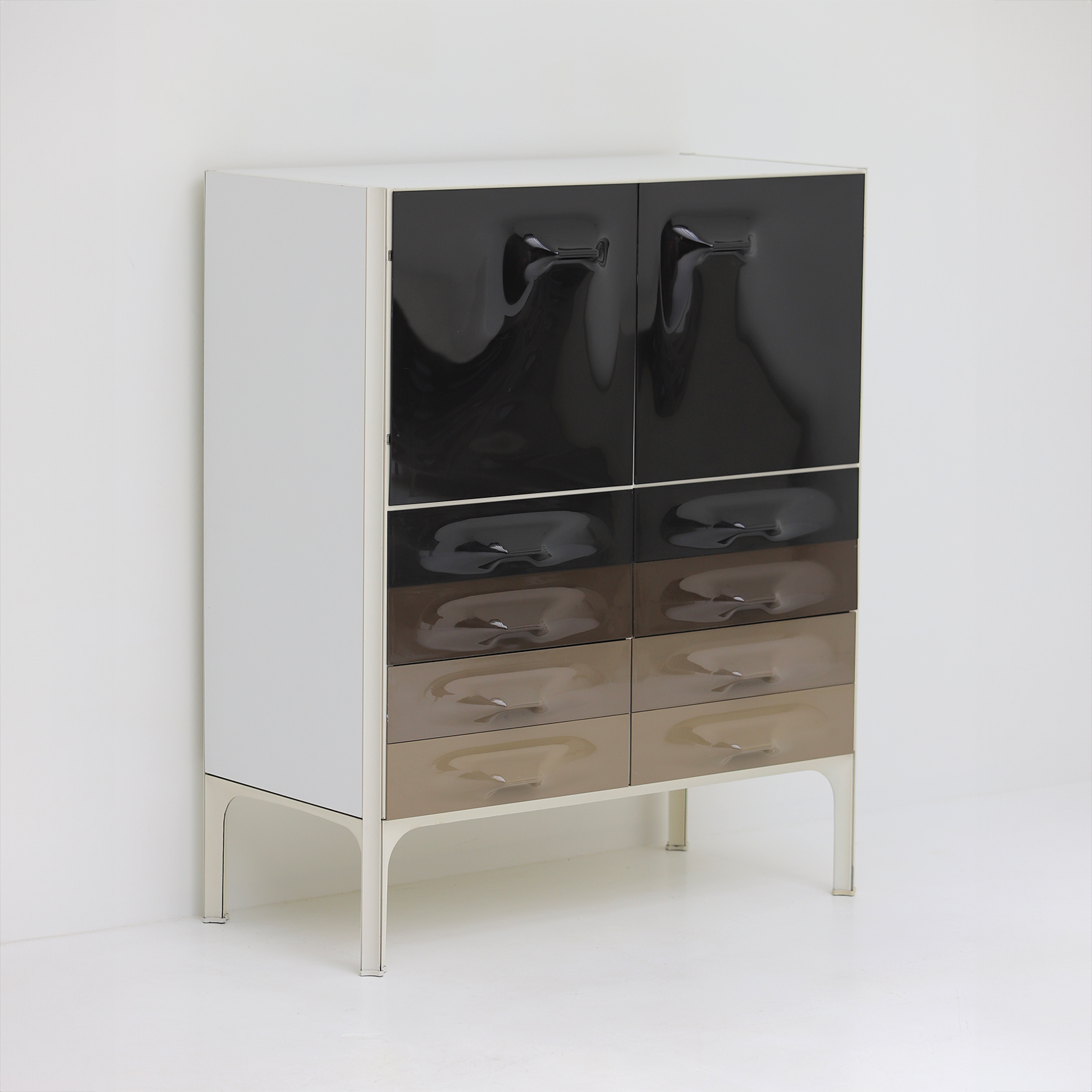
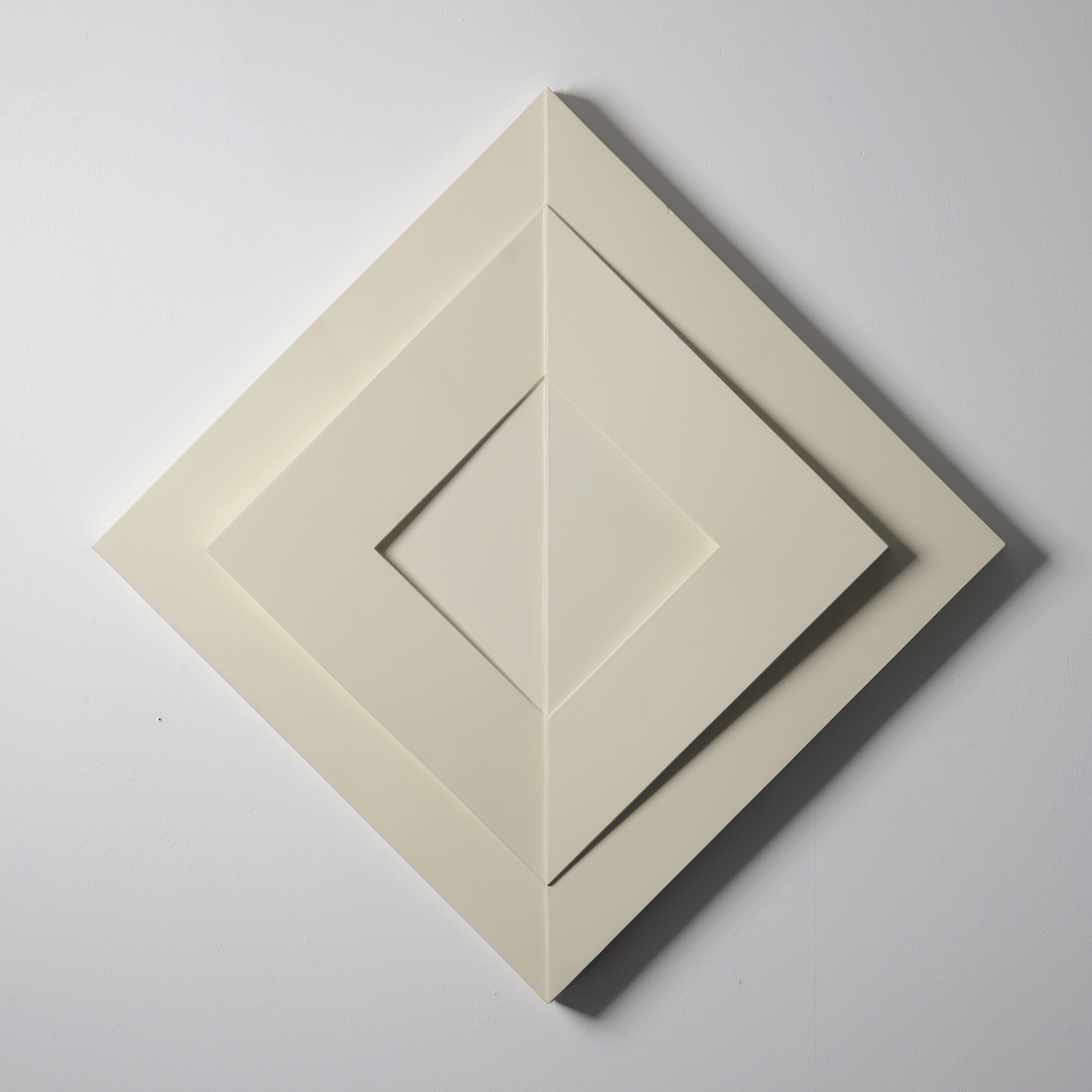
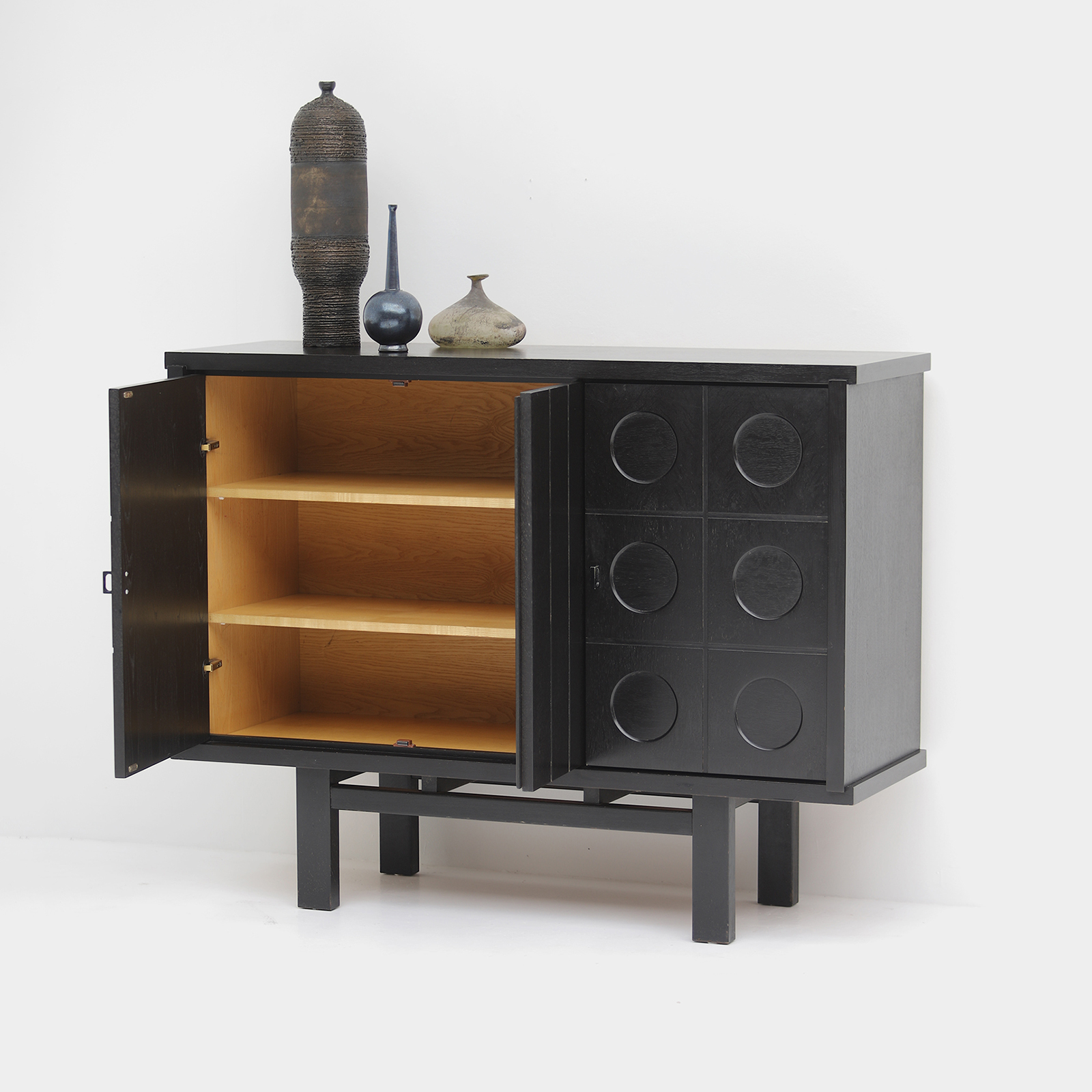
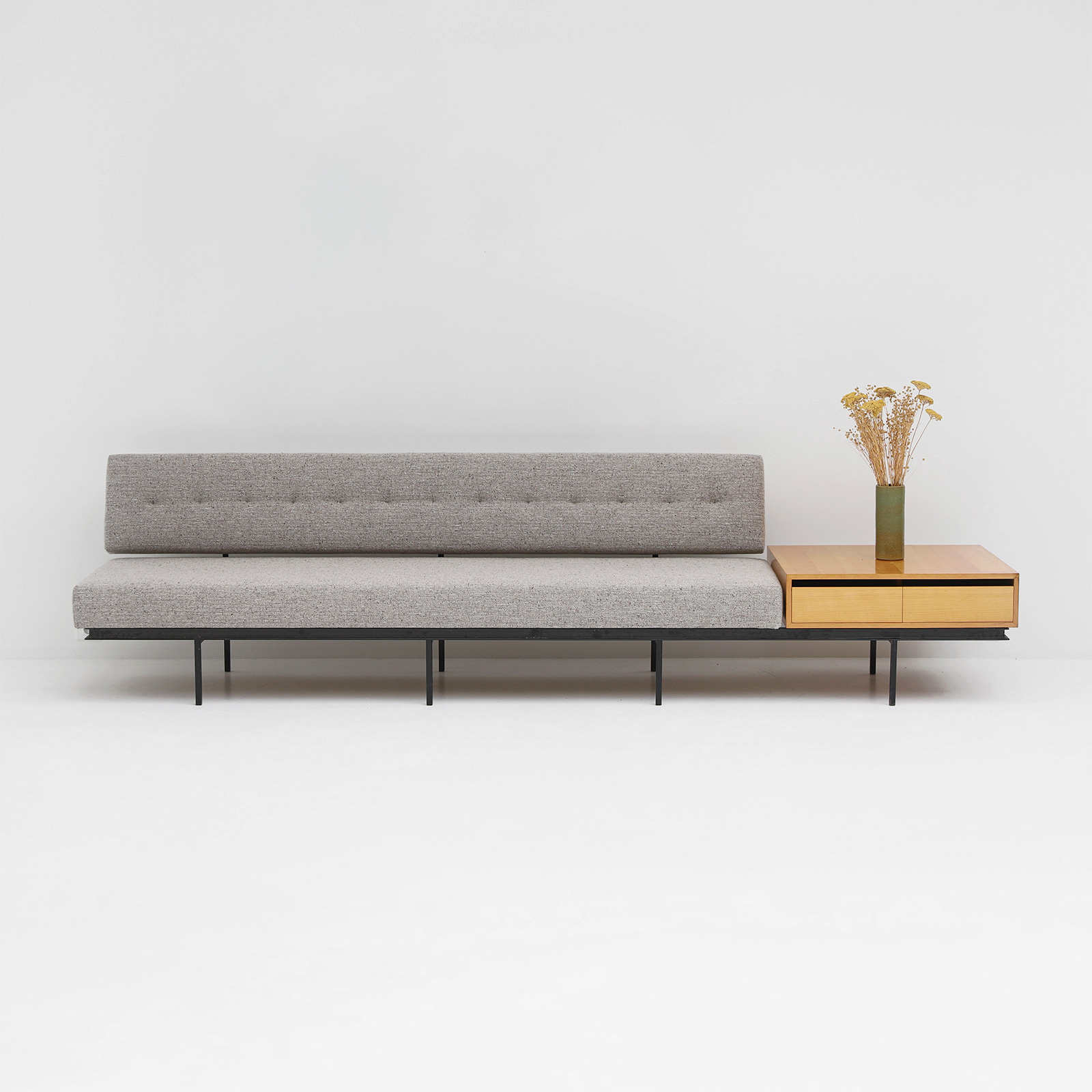
The Mobilier National is the successor to the Garde-Meuble de la Couronne (the entity originally responsible for the safeguarding of royal furnishings and tapestries), which was reorganized by Colbert in 1663; its structure still serves as the basis for the current administration’s organization. In addition to maintaining inventories and conserving and caring for furnishings, the Garde-Meuble de la Couronne also acted as an important force for preserving classic techniques through its traditional workshops. It was responsible for furnishing royal residences and issued the commissions necessary for these programs. This remains the central role for the Mobilier National, which is now responsible for the interior design and furnishing of presidential residences, as well as official buildings (ministries, embassies, major government agencies, the National Assembly, and the Senate).
In the early 1960s, the French government, under the leadership of André Malraux, then the Minister of Culture, inaugurated a policy of supporting creative endeavor; the objective was to provide genuine patronage that would foster the revival of French furniture design. As part of this commitment, the Atelier de Recherche et de Création (ARC) was established in 1964 under the direction of Jean Coural. The mission of this entity was to promote contemporary French styles, providing designers with modern technical resources and manufacturers with distribution opportunities, based on carefully directed research.
The ARC is a research laboratory with a highly qualified staff devoted to studying new materials and creating prototypes that are developed through collaboration with designers and in close cooperation with interested manufacturers. The design models remain the property of the government but may be subsequently distributed by a French producer.
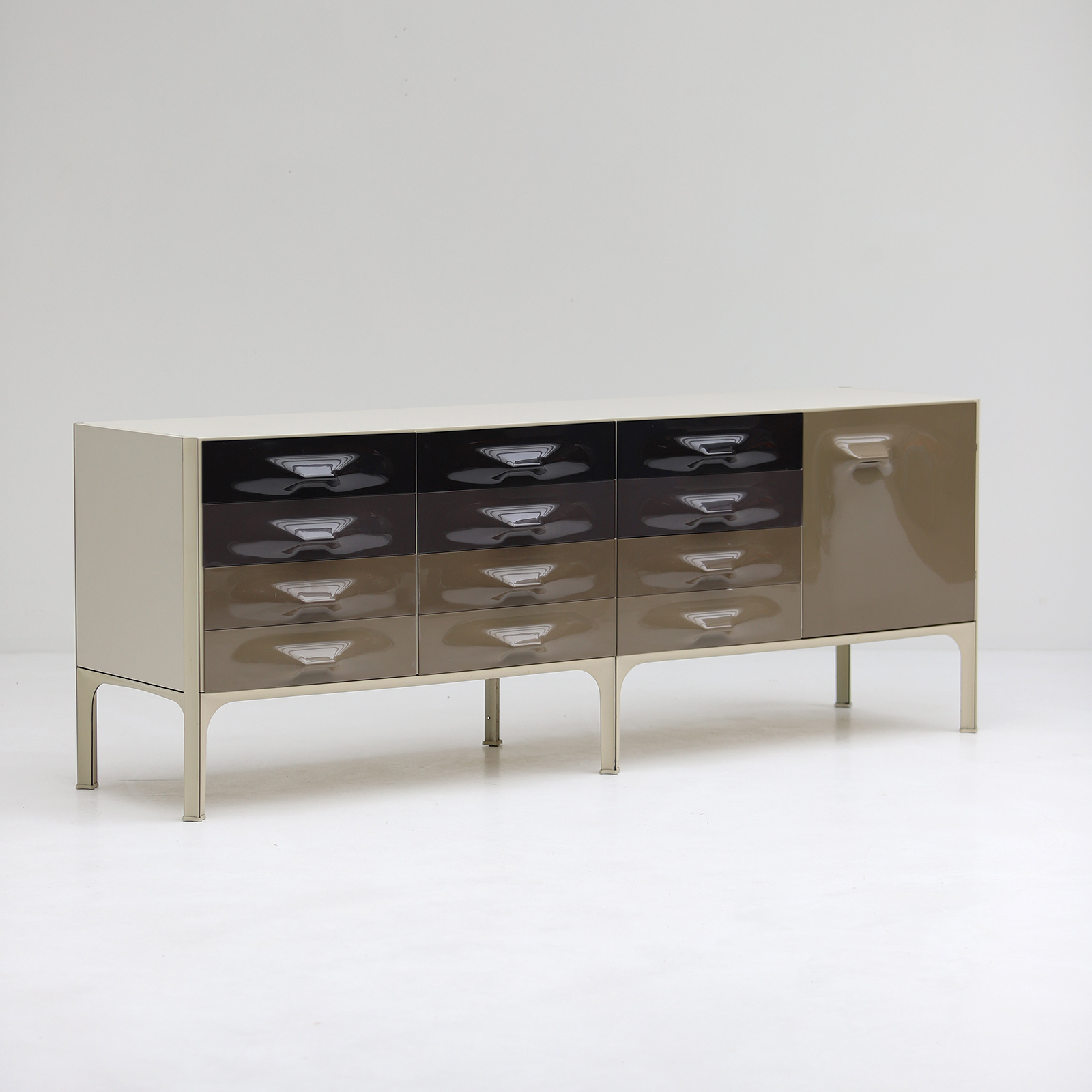
The finest designers of the 1960s and 1970s worked with Mobilier National, and the most significant creations of the era were products of this venture. Since its inception, the ARC has produced over 500 pieces of furniture, including special commissions for french pavilions at expositions of Montreal and Osaka, presidential residences and offices, and more recently the French embassy in Berlin and the Ministry of Culture and of Communication.
Exhibition: Mobilier National, New York, November 8
– February 11, by Designer, for Demisch Danant
source : dailyicon.net